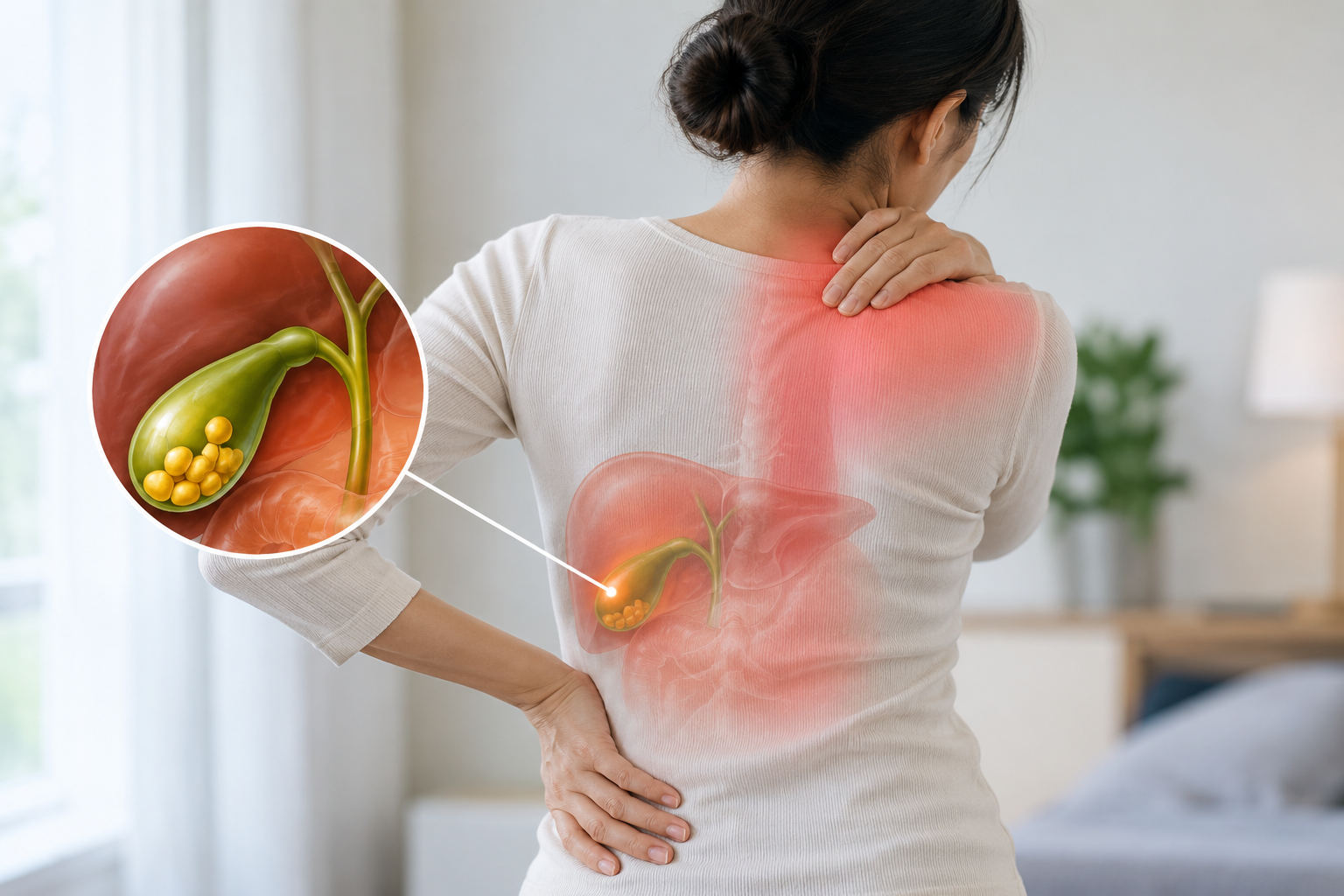
Pain beneath your right shoulder blade or across your upper back might make you think you've strained a muscle, slept in an awkward position or spent too many hours sitting at your desk. But what if the discomfort has nothing to do with your back or shoulder?
Sometimes, the pain can originate from an unexpected source: your gallbladder, a small organ located beneath your liver.
Although gallbladder pain is commonly associated with the upper abdomen, it can also spread towards the back or right shoulder. This happens through a process known as referred pain, where discomfort is felt in a different part of the body from where it originates.
In this article, we explore why this happens, what gallbladder-related pain can feel like and when it might be time to seek medical attention.
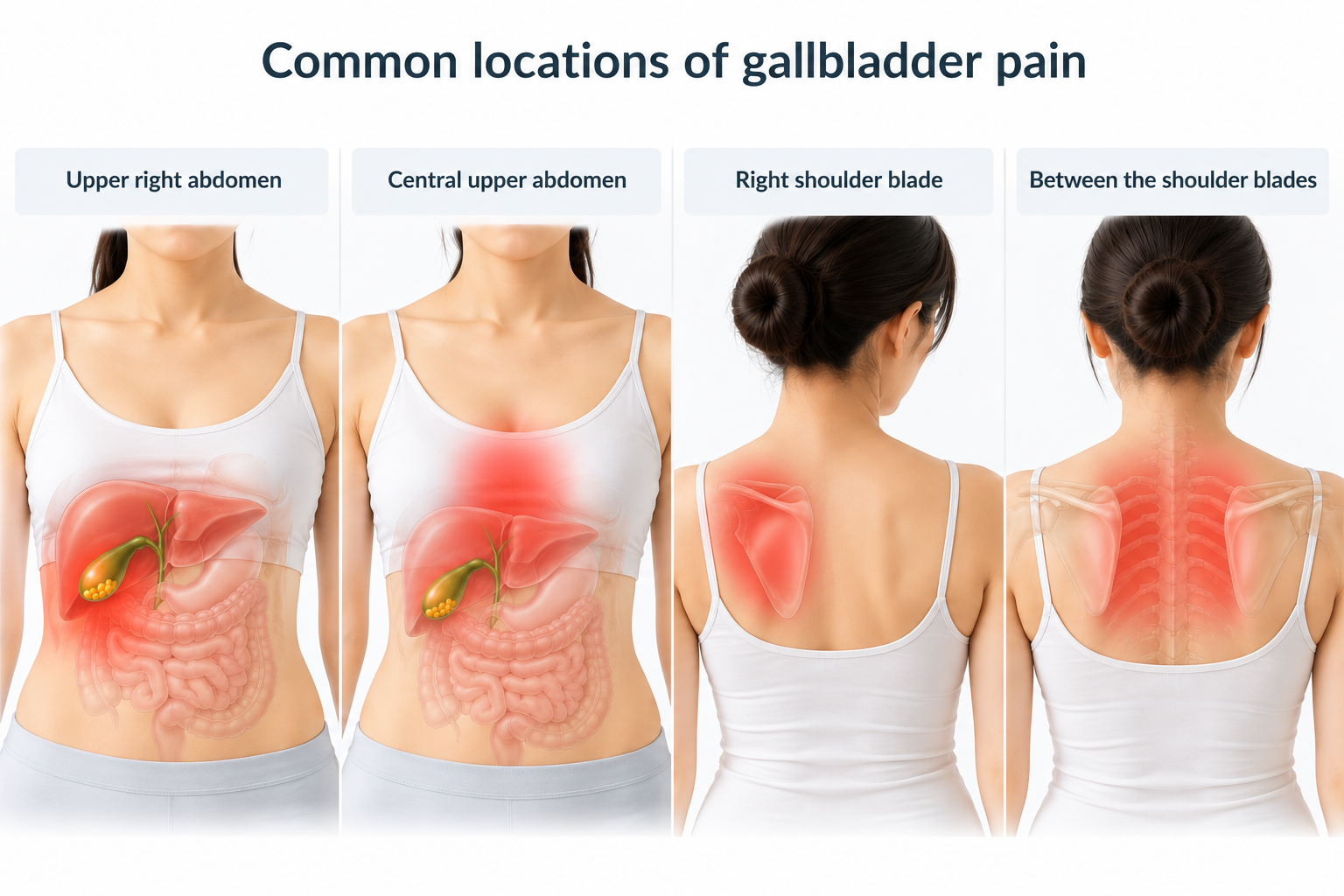
Gallbladder pain doesn't always occur directly over the gallbladder itself. While it most commonly affects the upper abdomen, the discomfort can also extend into the back or right shoulder, sometimes making it difficult to pinpoint where the pain is coming from.
| Upper right abdomen | The most common location, typically just beneath the right rib cage. The pain often feels like a deep, steady ache or pressure. |
| Central upper abdomen | Discomfort just below the breastbone, which can sometimes be mistaken for indigestion or stomach pain. |
| Right shoulder blade | Pain beneath or around the right shoulder blade, even without an obvious injury or muscle strain. |
| Between the shoulder blades | An ache extending across the upper back, which can occur alongside abdominal discomfort. |
The pain can vary in intensity and may last from around 30 minutes to several hours, depending on its cause. However, its location alone cannot confirm a gallbladder problem, as other conditions can produce similar symptoms.
The connection between your gallbladder and shoulder might seem unusual, especially when the two areas are so far apart. However, the way your nervous system processes pain signals can sometimes make discomfort appear in a different location from where the problem actually begins.
When an internal organ becomes irritated or inflamed, sensory nerves carry pain signals towards the spinal cord and brain. Some of these signals converge with nerve pathways that also receive information from other parts of the body.
As a result, your brain can interpret the pain as coming from somewhere else. This is known as referred pain.
In the case of the gallbladder, irritation involving nearby tissues and the diaphragm can contribute to pain felt around the right shoulder through the phrenic nerve. Other nerve pathways help explain why gallbladder pain can also extend towards the upper back or shoulder blade.
But what causes the gallbladder to produce these pain signals in the first place?
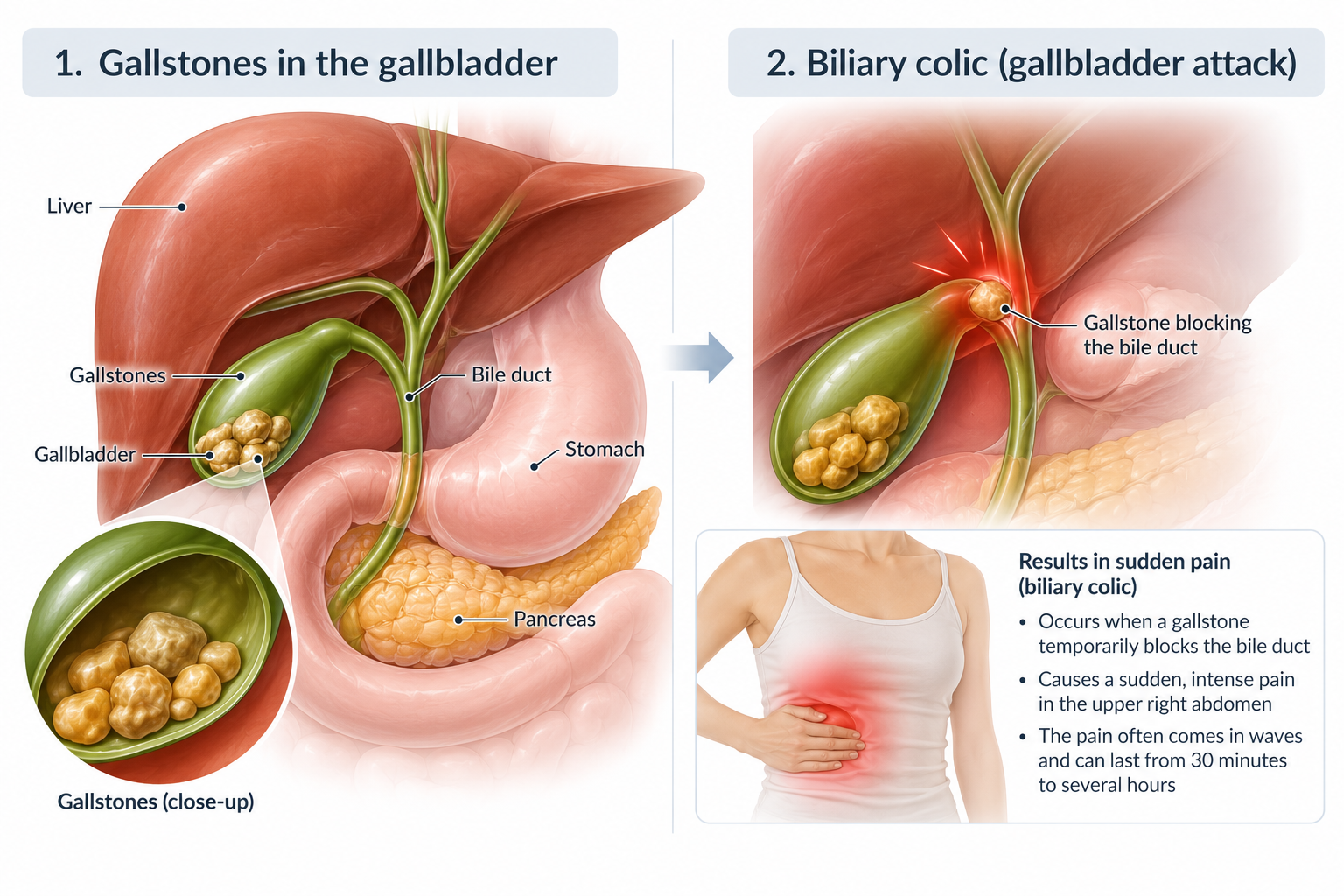
Your gallbladder stores bile, a digestive fluid produced by the liver that helps break down fats. When you eat, the gallbladder contracts to release bile into the small intestine.
However, if a gallstone temporarily blocks the gallbladder's outlet, pressure can build up inside the organ as it contracts. This can trigger biliary colic, an episode of intense, steady pain that typically affects the upper abdomen but can also spread towards the back or right shoulder.
These episodes sometimes occur after eating, especially following a fatty meal, because food stimulates the gallbladder to contract. The pain can last from around 30 minutes to several hours before subsiding if the obstruction resolves.
Sometimes, a gallstone remains lodged at the gallbladder's outlet, causing prolonged obstruction and inflammation. This condition is known as acute cholecystitis.
Unlike biliary colic, which generally settles when the blockage resolves, acute cholecystitis typically causes persistent upper abdominal pain that can extend towards the right shoulder or back. You may also experience fever, nausea, vomiting or tenderness beneath the right rib cage.
Gallstones can also enter the common bile duct, potentially causing bile duct obstruction, infection or pancreatitis. These complications require prompt medical attention.
An occasional ache in your back or shoulder isn't necessarily a cause for concern. However, if the pain keeps returning, lasts longer than usual or occurs alongside digestive symptoms, it's worth finding out what might be causing it.
Gallbladder-related pain can sometimes settle on its own, especially when a temporary blockage resolves. But that doesn't mean the underlying problem has disappeared. Gallstones can remain in the gallbladder and trigger further episodes.
Seek urgent medical attention if you experience any of the following:
These symptoms can indicate complications such as acute cholecystitis or bile duct obstruction, which require prompt medical assessment.
To investigate a possible gallbladder problem, your doctor may carry out the following assessments and tests:
These findings help your doctor determine whether the pain is related to the gallbladder or another condition, and which treatment approach is appropriate.
The good news is that gallbladder pain can often be relieved once its underlying cause is addressed. The right treatment will depend on what's causing your symptoms, whether gallstones are present and how often the pain occurs.
Your doctor may recommend:
If your back or shoulder pain is coming from your gallbladder, treating the problem can help relieve the discomfort in these areas too. This is why finding out what's causing the pain is an important first step.
It's easy to brush off an ache in your back or shoulder, especially when there doesn't seem to be an obvious reason for it. But if the discomfort keeps returning, or comes with symptoms such as abdominal pain or nausea, it's worth getting it checked.
While not every back or shoulder ache is related to the gallbladder, recognising when something feels unusual can help you seek care before a potential problem becomes more serious.
Dr Aaron Poh provides assessment and treatment for gallbladder conditions, including gallstones and gallbladder inflammation. If you're experiencing recurring or unexplained pain, schedule a consultation with us for a detailed diagnosis and personalised treatment plan.
Gallbladder pain typically spreads towards the right shoulder or upper back. Pain in the left shoulder is less characteristic of gallbladder problems and could have another cause. If left shoulder pain occurs alongside chest discomfort, breathlessness or fainting, seek emergency medical attention.
Pain caused by biliary colic typically lasts between 30 minutes and several hours. It often settles when the temporary blockage resolves. However, severe or persistent pain, especially when accompanied by fever or vomiting, requires urgent medical attention.
Yes. Gallbladder pain can develop at any time, including during the night, and can sometimes wake you from sleep. Although attacks can occur after eating, they do not always follow a predictable pattern.
If a gallstone temporarily blocks the gallbladder's outlet, the pain can subside once the obstruction resolves. However, the stone may still remain in the gallbladder, meaning further attacks can occur. Recurring pain should be assessed by a doctor, even if it settles between episodes.
Yes. Gallbladder pain can sometimes feel like discomfort or pressure in the upper abdomen, making it easy to confuse with indigestion. However, gallbladder attacks typically cause more sustained pain and can spread towards the back or right shoulder. Because symptoms can overlap, a medical assessment may be needed to identify the cause.


Patients are advised to have a consultation with our Surgical Specialist, Dr Aaron Poh to first understand your condition and concerns. After referring you to the appropriate screening tests, he will advise you of your diagnosis and treatment options after the tests and scopes


Copyright © Gallstones Doctor Singapore by Alpine Surgical Practice | Terms & Conditions

Copyright © Gallstones Doctor Singapore by Alpine Surgical Practice | Terms & Conditions