Find out more about gallstones treatment in Singapore, including symptoms, diagnosis, and when gallbladder removal surgery may be advised based on your condition.

Cholesterol stones are by far the commonest type of gallstone and can account for more than 90% of the gallstones we see in Singapore. These stones are formed as a result of over-concentration of cholesterol in the bile, leading to crystallisation of cholesterol salts and eventually forming cholesterol stones. It is important to note that the formation of gallstones is not strongly related to high blood cholesterol levels.
Individuals with or without high blood cholesterol levels are at largely equal risk of forming cholesterol stones and they tend to develop such stones in their late 30s and onwards.
Alpine Surgical is committed to practicing safe and reliable surgery to treat all types of Gallstones.
To schedule a consultation with us for gallstone removal Singapore, click here.

Pigment stones only account for a very small percentage of gallstones. These stones are formed as a result of high bilirubin levels in the bile, leading to crystallisation and formation of pigment stones. The high bilirubin levels are due to the breakdown of red blood cells and hence occurring in individuals with red blood cell disorders like thalassemia, sickle cell anaemia and hereditary spherocytosis. Individuals with pigment stones tend to be much younger in their 20s to early 30s.
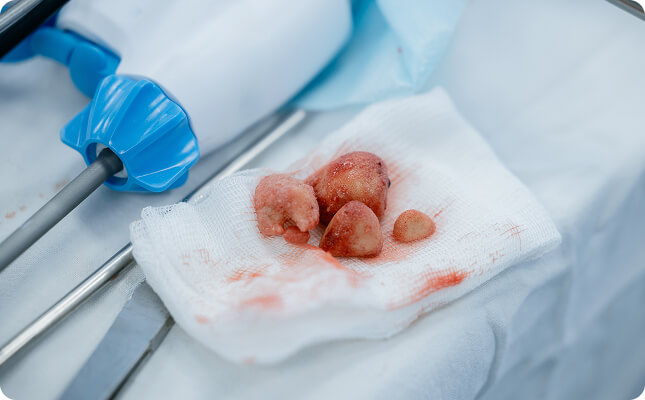

Pigment stones only account for a very small percentage of gallstones. These stones are formed as a result of high bilirubin levels in the bile, leading to crystallisation and formation of pigment stones. The high bilirubin levels are due to the breakdown of red blood cells and hence occurring in individuals with red blood cell disorders like thalassemia, sickle cell anaemia and hereditary spherocytosis. Individuals with pigment stones tend to be much younger in their 20s to early 30s.

8-22% of individuals with initially non-symptomatic gallstones will go on to develop pain and/or complications in their lifetime. This occurs at a greater percentage in the first 5 years after the discovery of the gallstones.
There is a spectrum of gallstone-related complications, ranging from asymptomatic jaundice to acute cholecystitis (acute infection of the gallbladder) to cholangitis (acute infection of the bile duct) and acute necrotizing pancreatitis. These complications occur as a result of the gallstones causing obstruction/blockage to the flow of bile. Depending on the site of obstruction, the complications can range from acute cholecystitis (cystic duct obstruction) to cholangitis (bile duct obstruction) and pancreatitis (pancreatic duct obstruction).
“Individuals who have symptomatic gallstones complain of a spectrum of symptoms that occur after taking food, and this can range from a mild discomfort to a bloated feeling to severe pain.”
Gallstones are typically treated by removing the gallbladder in a procedure known as a laparoscopic cholecystectomy. This is a minimally invasive approach performed using small incisions and specialised instruments. Most patients are able to resume light activities within a few days, depending on their recovery.
In other cases, surgery may also be required if gallstones lead to complications. These can include inflammation or infection of the gallbladder (cholecystitis), blockage of the bile ducts, or inflammation of the pancreas (pancreatitis).
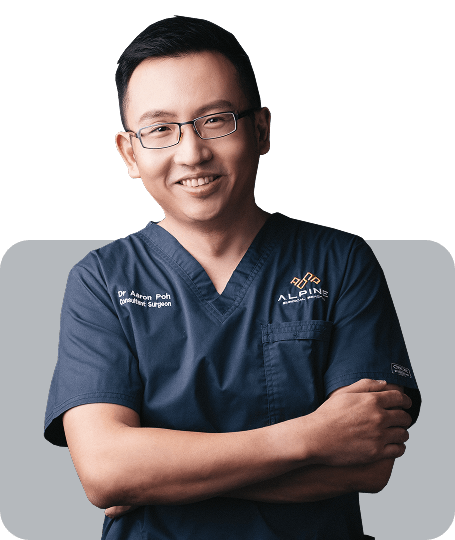
Dr Aaron Poh obtained his M.B.B.S (Bachelor of Medicine & Bachelor of Surgery) from the National University of Singapore in 2004. He then entered the MOH General Surgical training programme in 2006 and obtained his Fellowship from the Royal College of Surgeons of Edinburgh (F.R.C.S Edinburgh) in 2015. He was also accepted into the Colorectal Fellowship programme in the Queen Elizabeth Hospital in Birmingham, UK in 2014. His special interest is in minimally invasive colorectal cancer surgery and exenterative surgery for advanced cancers.


Patients are advised to have a consultation with our Surgical Specialist, Dr Aaron Poh to first understand your condition and concerns. After referring you to the appropriate screening tests, he will advise you of your diagnosis and treatment options after the tests and scopes


Copyright © Gallstones Doctor Singapore by Alpine Surgical Practice | Terms & Conditions

Copyright © Gallstones Doctor Singapore by Alpine Surgical Practice | Terms & Conditions