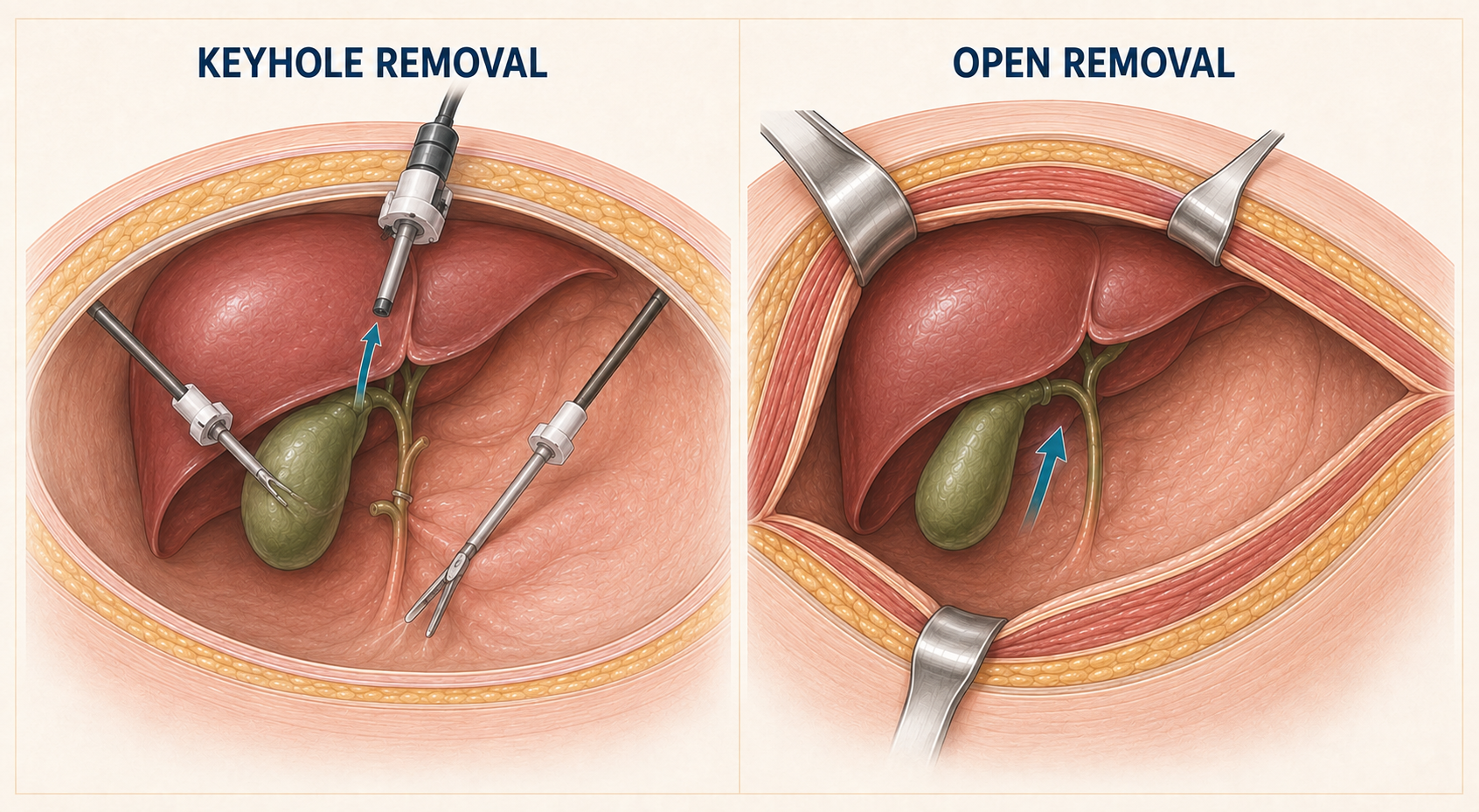
If your surgeon has recommended gallbladder removal, you may be wondering what happens next. How should you prepare? Will the operation be performed using keyhole surgery? How long will you stay in hospital, and what will recovery be like once you return home?
Gallbladder removal, also known as a cholecystectomy, is commonly performed using minimally invasive laparoscopic surgery. In some circumstances, however, an open operation may be required.
Knowing what to expect can make the process feel less unfamiliar. This guide explains the difference between keyhole and open gallbladder removal, how to prepare for surgery and what generally happens during your hospital stay and recovery.
Gallbladder removal may be performed using laparoscopic keyhole surgery or open surgery. Both operations remove the entire gallbladder, but they use different types of incisions and generally involve different recovery periods.
The recommended approach depends on the condition of the gallbladder, previous abdominal surgery, individual anatomy, complications and what the surgeon considers safest.
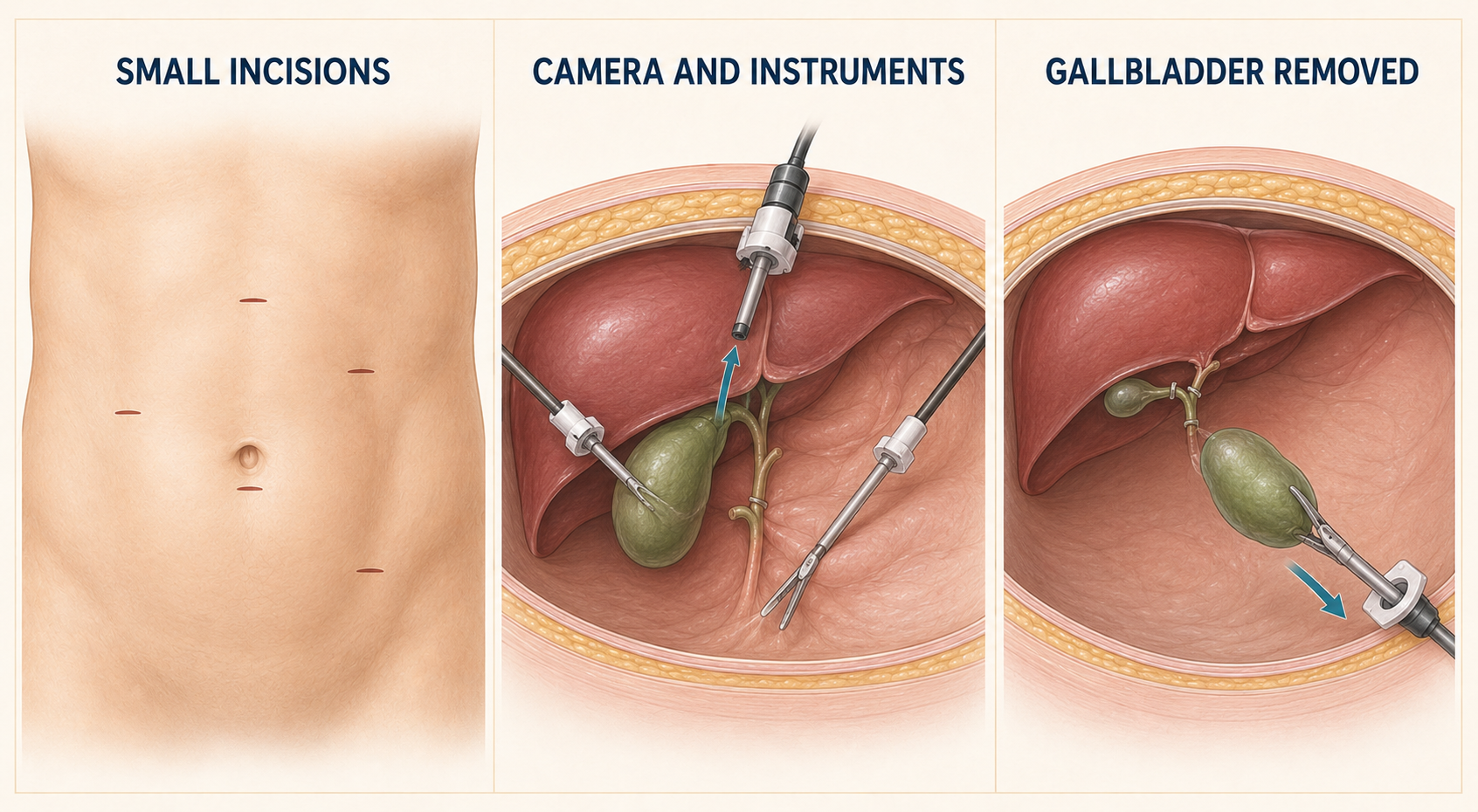
Laparoscopic cholecystectomy is the approach most commonly used for gallbladder removal when keyhole surgery is suitable.
The operation is performed under general anaesthesia. Several small incisions are made in the abdomen, allowing a laparoscope and specialised surgical instruments to be inserted. Carbon dioxide gas is used to create space inside the abdomen so that the surgeon can see and operate.
The gallbladder is carefully separated from the bile duct, blood supply and liver before being removed through one of the small incisions.
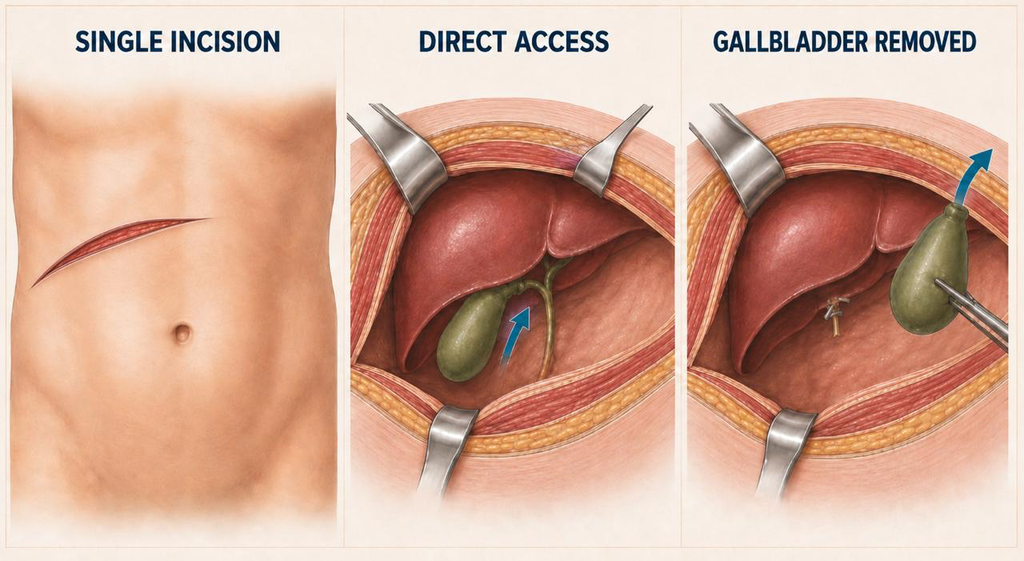
Open cholecystectomy removes the gallbladder through a larger incision in the upper abdomen.
Open surgery may occasionally be planned from the outset. In other cases, an operation that begins laparoscopically may need to be converted to open surgery if severe inflammation, scar tissue, bleeding or unclear anatomy makes it difficult to proceed safely through keyhole incisions.
Open gallbladder removal generally requires a longer hospital stay and recovery period because of the larger abdominal incision. However, it may be the safer approach in certain complex situations.
Conversion to open surgery does not necessarily mean that something has gone wrong. It is a surgical decision made when continuing with the laparoscopic approach may not be appropriate or safe.
| Laparoscopic gallbladder removal | Open gallbladder removal | |
| Incisions | Several small abdominal incisions | One larger incision in the upper abdomen |
| How it is performed | Uses a camera and specialised keyhole instruments | The surgeon accesses the gallbladder directly through the larger incision |
| When may it be used? | Commonly used when gallbladder removal is required and keyhole surgery is suitable | May be planned for certain complex cases or required when keyhole surgery cannot be completed safely |
| Hospital stay | Often same-day discharge or a short hospital stay | Usually requires a longer hospital stay |
| Recovery | Generally faster, with some patients returning to desk-based work within one to two weeks | Generally longer because the abdominal incision needs more time to heal |
| Scarring | Several smaller scars | One larger abdominal scar |
| Return to activity | Gradual return over the first few weeks, depending on recovery and the type of activity | A longer restriction period may be required, particularly for lifting and strenuous activity |
Laparoscopic surgery is the standard approach for most patients requiring gallbladder removal, but the safest technique depends on the individual case.
Like any operation, gallbladder removal carries potential risks. These may include bleeding, infection, bile leakage, injury to the bile duct or nearby structures, blood clots and complications related to anaesthesia. Your surgeon will discuss the risks relevant to your condition before surgery.
Our care team will provide instructions based on your health and the type of operation planned.
Preparation may include:
Make sure your healthcare team knows if you take blood-thinning medication, medication for diabetes, supplements or traditional medicines. Do not stop prescribed medication unless you have been instructed to do so.
Follow the fasting instructions carefully. Gallbladder removal is performed under general anaesthesia, so your stomach needs to be empty before the operation.
You should also prepare for your return home. Loose clothing may be more comfortable after abdominal surgery, and arranging help with meals, household tasks or childcare may make the first few days easier.
When you arrive at the hospital, your identity, planned procedure, medications and allergies will be confirmed. You may also change into a hospital gown and undergo final pre-operative checks.
Your surgeon and anaesthesia team will speak with you before the operation. This is an opportunity to ask any remaining questions about the procedure, anaesthesia or recovery.
Gallbladder removal is performed under general anaesthesia, which means you will be asleep and will not feel the operation.
A laparoscopic cholecystectomy often takes around an hour, although the duration can vary according to inflammation, anatomy and the complexity of the procedure.
After the operation, you will be moved to a recovery area while the effects of the anaesthetic wear off. Your breathing, blood pressure, heart rate and comfort will be monitored.
You may experience:
Shoulder-tip pain can occur after laparoscopic surgery because of the carbon dioxide gas used during the procedure. It usually improves as the remaining gas is absorbed.
Pain relief and medication for nausea can be provided when required. You may also be encouraged to begin drinking, eating lightly and walking once your healthcare team considers it safe.
Many patients can return home on the same day or after a short hospital stay following uncomplicated laparoscopic gallbladder removal.
A longer stay may be required if you undergo open surgery, have significant inflammation, require additional treatment or need further monitoring.
Before discharge, the healthcare team will check that you have recovered sufficiently from the anaesthetic and that there are no immediate concerns. You will receive instructions about:
Arrange for someone to take you home. You should not drive yourself after general anaesthesia.
It is common to feel tired and experience some abdominal discomfort during the first few days. Follow the instructions provided by your surgical team and gradually increase your activity as you recover.
Contact the clinic if digestive symptoms persist, worsen or significantly affect your ability to eat.
Some discomfort, tiredness and mild swelling around the incisions can occur during recovery. However, contact our healthcare team if you experience:
Seek urgent medical attention for chest pain, difficulty breathing, fainting, severe abdominal pain or new pain and swelling in one leg.
Gallbladder care does not end when the operation is completed. Preparation, appropriate follow-up and clear recovery guidance are also important parts of the surgical journey.
If you have been advised to undergo gallbladder removal and would like to understand the procedure, recovery or available surgical approaches, arrange an appointment with Dr Aaron Poh at Alpine Surgical Practice.
Laparoscopic surgery is the most commonly used approach when suitable. However, open surgery may be planned for certain complex cases or required if the operation cannot be completed safely using keyhole instruments.
Many patients undergoing uncomplicated laparoscopic surgery can return home on the same day or after a short hospital stay. Open surgery usually requires a longer admission.
The operation is performed under general anaesthesia, so you will be asleep during the procedure. Abdominal discomfort and tenderness around the incisions are expected afterwards and can usually be managed with pain medication.
Some patients return to desk-based work within one to two weeks after uncomplicated laparoscopic surgery. Recovery may take longer after open surgery or when returning to heavy lifting, strenuous exercise or physically demanding work.
Most people can gradually return to a normal, balanced diet. Smaller meals and temporarily reducing fatty or greasy foods may be more comfortable if you experience bloating, indigestion or loose stools during early recovery.
Gallstones cannot form inside a gallbladder that has been removed. However, stones may occasionally remain or form within the bile ducts. Seek medical assessment if you develop jaundice, persistent upper abdominal pain, fever or other concerning symptoms after surgery.
If you have recurring abdominal pain, gallstones, gallbladder inflammation or have been advised that surgery may be needed, an assessment with a specialist can help determine the most appropriate treatment plan.


Patients are advised to have a consultation with our Surgical Specialist, Dr Aaron Poh to first understand your condition and concerns. After referring you to the appropriate screening tests, he will advise you of your diagnosis and treatment options after the tests and scopes


Copyright © Gallstones Doctor Singapore by Alpine Surgical Practice | Terms & Conditions

Copyright © Gallstones Doctor Singapore by Alpine Surgical Practice | Terms & Conditions