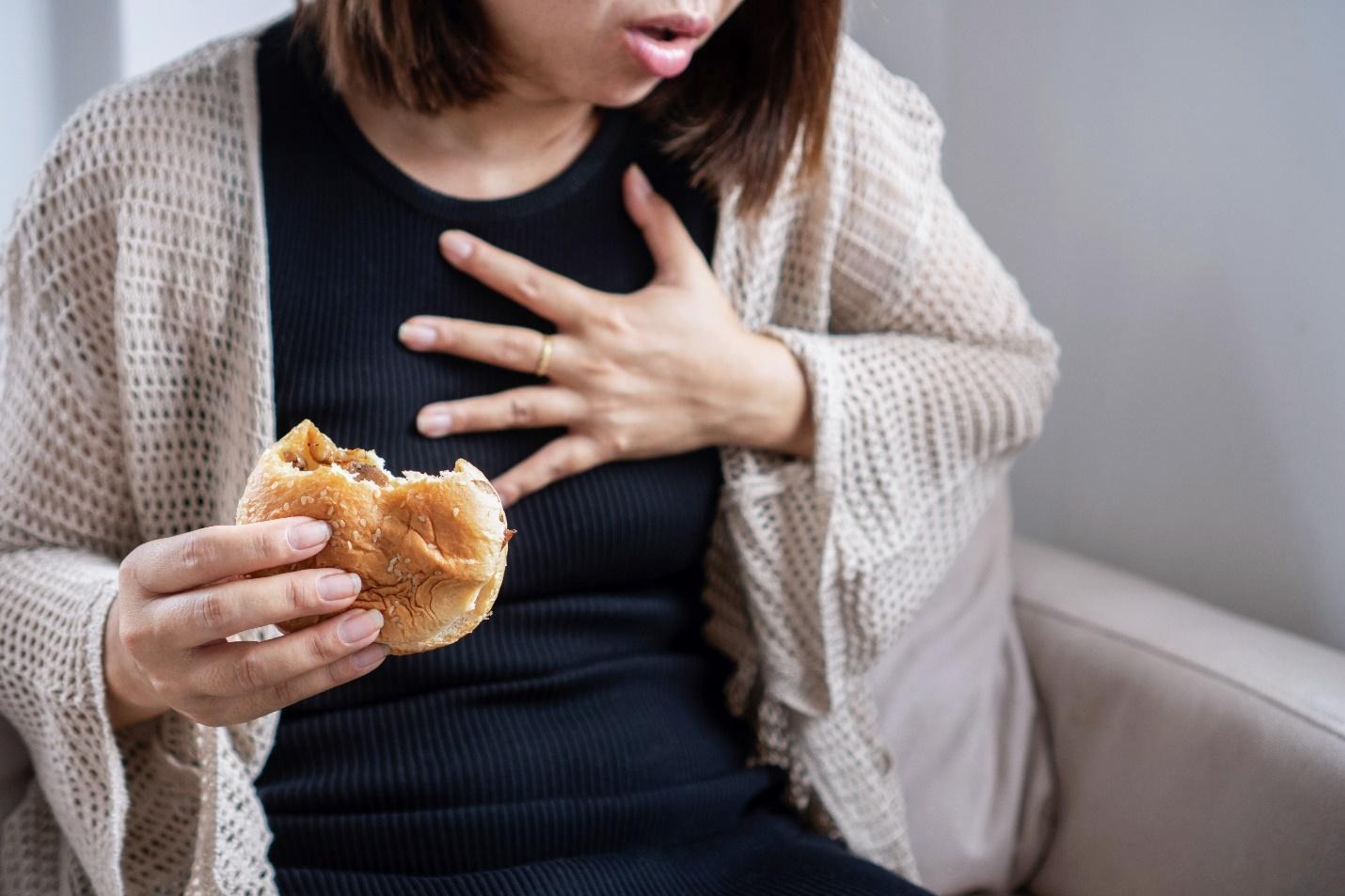
A rich meal can sometimes leave you feeling uncomfortable. Perhaps you notice bloating after eating fried foods, feel unusually full after a heavy meal or experience nausea that seems to appear after foods that are higher in fat.
For many people, these symptoms are temporary and may simply reflect eating too much or consuming foods that are harder to digest. However, when nausea repeatedly occurs after fatty meals, particularly when it is accompanied by upper abdominal pain, indigestion or other digestive symptoms, it may be a sign of an underlying digestive condition.
One possible cause is gallstones, which can interfere with the normal release of bile needed to digest fats. The gallbladder stores and releases bile, a digestive fluid produced by the liver that helps break down fats [1]. When gallstones develop, they may disrupt the normal flow of bile [2], particularly after fatty meals when the gallbladder contracts to release more bile. As a result, some people notice symptoms after eating foods such as fried dishes, fatty meats, creamy sauces or other high-fat meals.
However, nausea after eating fatty foods does not automatically mean you have gallstones. Many digestive conditions can cause similar symptoms, making it important to consider the overall pattern of your symptoms. This guide explains why nausea may occur after eating fatty foods, how gallstones contribute to these symptoms, what other conditions may produce similar symptoms and when to seek medical advice.
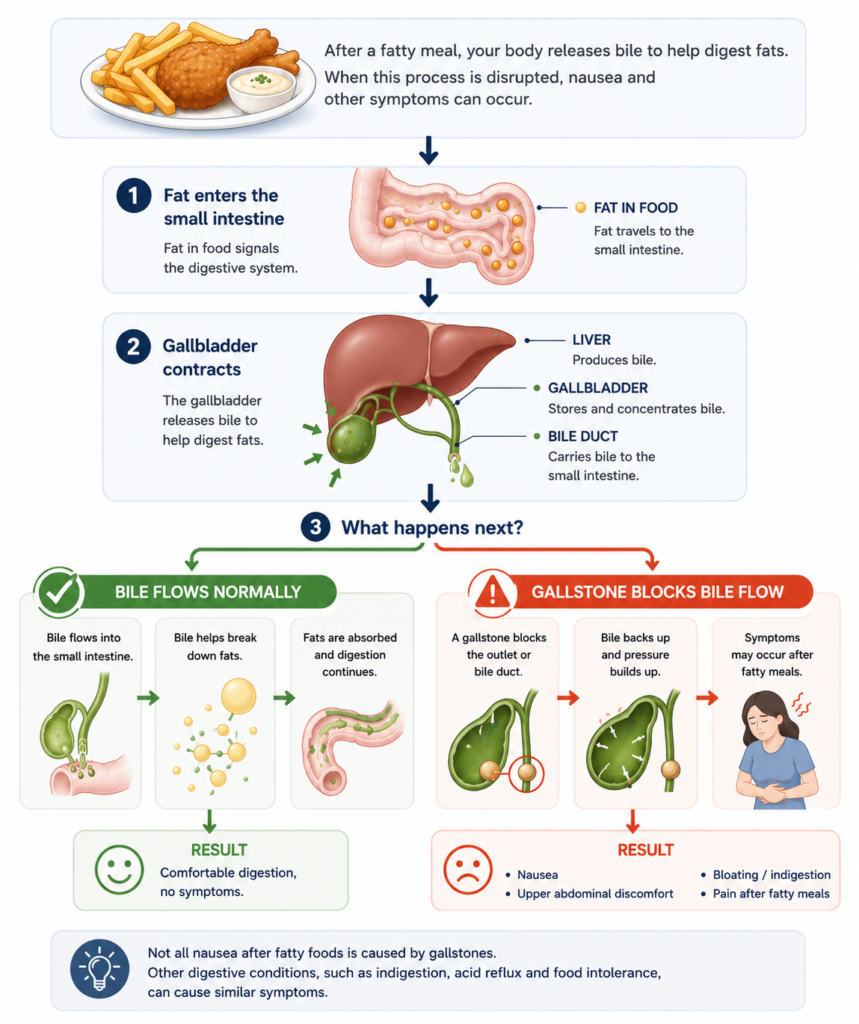
After eating a meal that contains fat, your digestive system releases hormones that signal the gallbladder to contract and release bile, a digestive fluid produced by the liver that helps break down fats [3]. Under normal circumstances, this process occurs without causing symptoms.
However, when this process is disrupted, such as by gallstones interfering with the normal flow of bile, nausea and other digestive symptoms may occur. If gallstones are present, the gallbladder's contraction after a fatty meal may temporarily interfere with the normal flow of bile [4], leading to nausea, upper abdominal discomfort or pain.
Foods that commonly trigger symptoms include:
Not everyone experiences symptoms after eating fatty foods, and not every episode of nausea is caused by gallstones. Whether symptoms occur depends on the underlying cause, as well as factors such as the size and location of any gallstones, whether bile flow becomes temporarily blocked and how the gallbladder responds during digestion.
While reducing fatty foods may help minimise symptoms, dietary changes do not remove existing gallstones [5] or treat the underlying condition. If symptoms continue to recur, further assessment may be needed to determine whether gallstones or another digestive disorder is responsible.
No. Gallstones are one possible cause of nausea after eating fatty foods, but they are not the only one. Other digestive conditions include:
| Causes | How it may cause nausea after fatty foods |
| Indigestion (Functional Dyspepsia) | A sensitive upper digestive tract can cause symptoms such as early fullness, bloating, upper abdominal discomfort and nausea after eating, even when no structural abnormality is present. |
| Acid Reflux or Gastroesophageal Reflux Disease (GERD) | Fatty foods can relax the lower oesophageal sphincter, allowing stomach acid to flow back into the oesophagus. This may cause heartburn, an acid taste, chest discomfort and nausea. |
| Food Intolerance | Difficulty digesting certain foods, such as dairy or other ingredients, may lead to nausea, bloating and abdominal discomfort after meals. |
| Pancreatic Conditions | Because the pancreas produces enzymes that help digest fats, conditions affecting the pancreas can sometimes cause nausea or abdominal pain after fatty meals. |
| Gallbladder Conditions Other Than Gallstones | Gallstones are not the only gallbladder disorder that may cause symptoms. Cholecystitis, bile duct stones, gallbladder polyps and gallbladder dysfunction may also cause similar symptoms. |
Many digestive conditions can produce similar symptoms, which is why nausea after eating fatty foods should not be self-diagnosed.
Nausea alone is not enough to confirm gallstones. However, certain symptom patterns make gallbladder disease more likely:
If you experience one or more of these symptoms, particularly if they recur after eating fatty foods, it is advisable to seek medical assessment to determine whether gallstones or another digestive condition may be responsible.
Gallstones only cause symptoms when they interfere with the normal flow of bile. Gallstones do not always cause symptoms, and many are discovered incidentally during an ultrasound performed for another reason.
Symptoms develop when a gallstone temporarily blocks the normal flow of bile. After eating a fatty meal, the gallbladder contracts to release bile into the small intestine to help digest fats. If a gallstone obstructs the gallbladder outlet or bile duct, pressure builds within the gallbladder, which can trigger symptoms such as nausea, upper abdominal pain and vomiting [6].
If the blockage resolves, symptoms may settle on their own. However, if the obstruction persists, it can lead to complications such as acute cholecystitis, bile duct stones, cholangitis or gallstone pancreatitis, which require prompt medical attention.
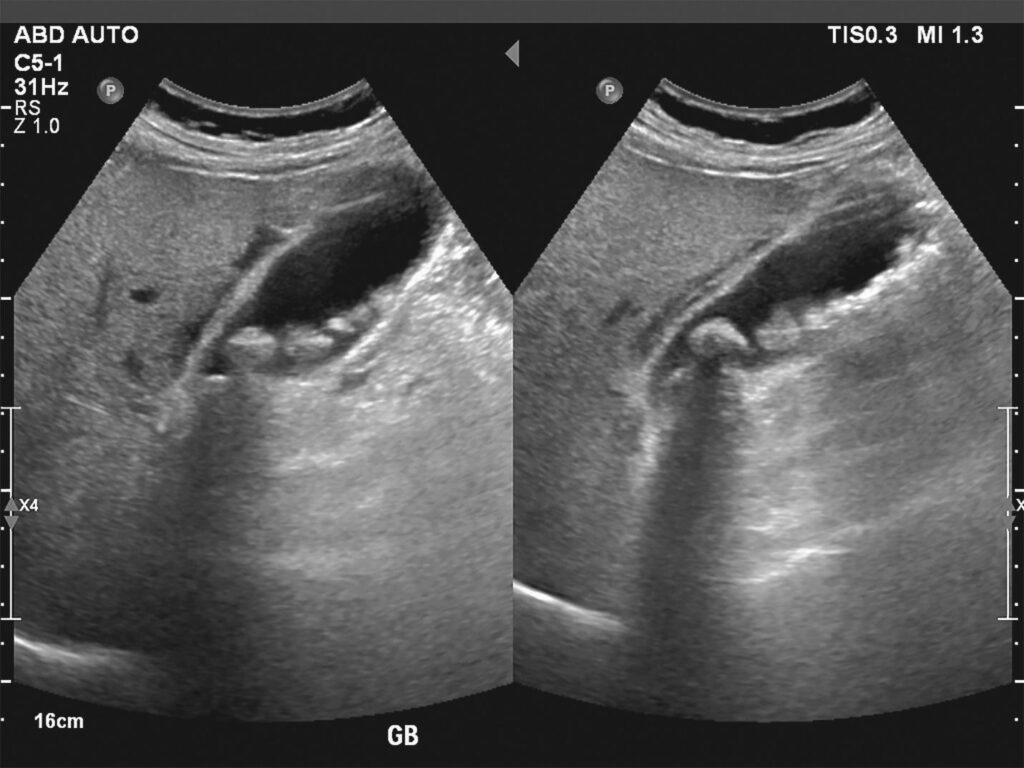
If gallstones are suspected, our doctor will assess your symptoms, medical history and overall health before recommending appropriate investigations.
Our doctor may ask about:
The overall pattern of symptoms helps determine whether gallbladder disease is likely.
Your abdomen may be examined for tenderness or signs of inflammation. Although a physical examination cannot confirm gallstones, it provides useful information alongside your symptoms and investigation results.
Ultrasound is the preferred first-line imaging test for diagnosing gallstones [7] because it is non-invasive and does not involve radiation. It can identify:
A confirmed diagnosis helps determine whether observation, lifestyle measures or treatment is the most appropriate next step.
Gallstones that are discovered incidentally and are not causing symptoms often do not require immediate treatment. Many people remain symptom-free throughout their lives, so regular monitoring rather than surgery is usually recommended. Our doctor may advise follow-up if symptoms develop or if there are concerns about future complications.
When gallstones cause recurrent pain, nausea after meals or other gallbladder-related symptoms, laparoscopic cholecystectomy is generally the recommended definitive treatment [8]. This minimally invasive procedure removes the gallbladder, preventing future gallstone attacks by removing the organ where gallstones form.
If complications such as acute cholecystitis, bile duct obstruction, cholangitis or gallstone pancreatitis occur, treatment may become more urgent.
Some patients hope to avoid surgery by dissolving gallstones with medication. While bile acid medicines may have some help in dissolving certain cholesterol gallstones, they are only suitable for selected patients, and treatment may take up to two years to achieve partial stone dissolution
Medication is generally less effective than surgery for symptomatic gallstones, and gallstones may recur after treatment is stopped. As a result, laparoscopic cholecystectomy remains the most established long-term treatment for patients with recurrent symptoms or gallstone-related complications.
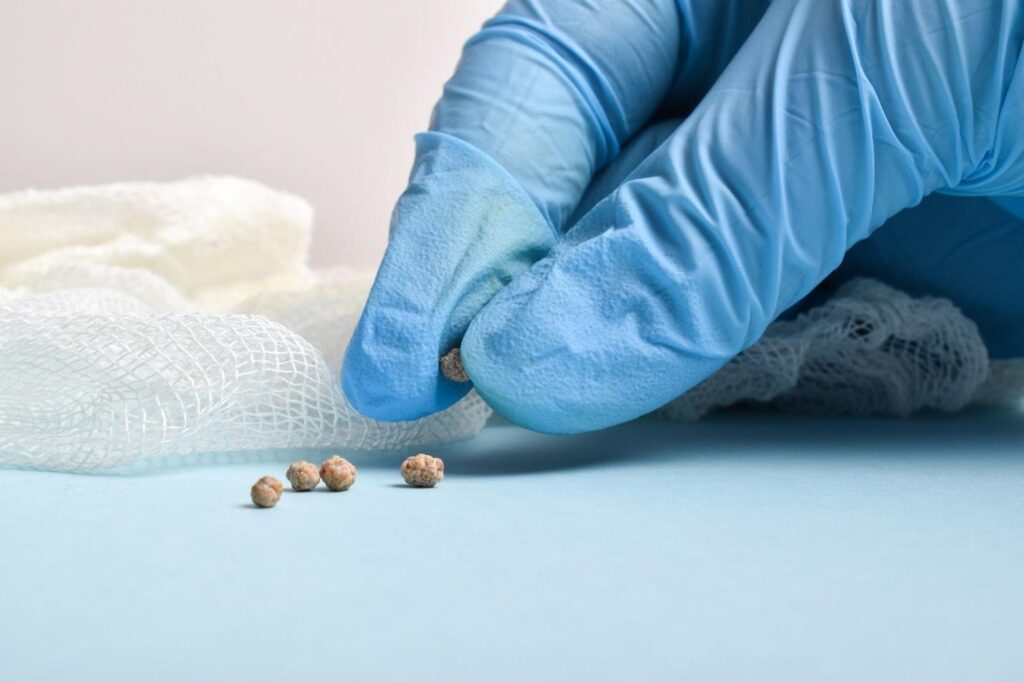
Hopefully, this guide has helped you better understand why nausea can occur after eating fatty foods and why it does not necessarily mean you have gallstones. Many digestive conditions can produce similar symptoms, and identifying the underlying cause is the first step towards appropriate treatment.
However, if your nausea occurs repeatedly after fatty meals, is accompanied by upper abdominal pain, vomiting, fever, jaundice or other persistent digestive symptoms, it is important not to ignore it. A medical assessment can help determine whether gallstones or another digestive condition is responsible.
At Alpine Surgical, Dr Aaron Poh provides comprehensive assessment and treatment for gallstones and other gallbladder conditions. Through a detailed evaluation, he can identify the underlying cause of your symptoms and recommend a personalised management plan, whether that involves observation, lifestyle modifications or surgical treatment when appropriate. Schedule a consultation for a detailed diagnosis and a personalised treatment plan tailored to your condition.


Patients are advised to have a consultation with our Surgical Specialist, Dr Aaron Poh to first understand your condition and concerns. After referring you to the appropriate screening tests, he will advise you of your diagnosis and treatment options after the tests and scopes


Copyright © Gallstones Doctor Singapore by Alpine Surgical Practice | Terms & Conditions

Copyright © Gallstones Doctor Singapore by Alpine Surgical Practice | Terms & Conditions