Being told that you need gallbladder surgery often brings a mixture of relief and uncertainty. Relief because there may finally be a solution to recurring pain, gallstone attacks or inflammation. Uncertainty because many patients are unfamiliar with the different surgical approaches available and what they may mean for treatment and recovery.
One of the most common questions patients ask is whether they will undergo laparoscopic gallbladder surgery or open gallbladder surgery. Both procedures are performed to remove the gallbladder and treat conditions such as gallstones, cholecystitis, gallbladder polyps and certain gallstone-related complications. However, the way the surgery is performed, the size of the incisions, the recovery process and the situations in which each approach may be recommended can differ significantly.
Understanding these differences can help you make sense of your treatment options and feel more confident when discussing surgery with your surgeon. It can also provide reassurance that the recommended approach is based on what is safest and most appropriate for your individual condition and needs.
Gallbladder surgery, also known as a cholecystectomy, is performed to remove the gallbladder when it becomes a source of symptoms or complications. The gallbladder is a small organ located beneath the liver that stores bile, a digestive fluid that helps break down fats.
While the gallbladder plays a role in digestion, it is not essential for survival. After gallbladder removal, bile continues to flow directly from the liver into the digestive tract.
Gallbladder surgery may be recommended for conditions such as:
Regardless of the surgical approach used, the aim of treatment is to remove the diseased gallbladder, prevent recurrent symptoms and reduce the risk of future complications.

Open gallbladder surgery is a traditional surgical approach that removes the gallbladder through a single long incision in the upper abdomen. This incision allows the surgeon to directly view and access the gallbladder, bile ducts and surrounding structures during the procedure.
The operation is performed under general anaesthesia, meaning you will be asleep throughout the surgery. After making the incision, the surgeon carefully separates the gallbladder from the liver, identifies the cystic duct and blood vessels supplying the gallbladder and removes the organ. The surgical site is then checked before the incision is closed.
Although laparoscopic surgery is commonly performed today, open gallbladder surgery remains an important option in selected situations. It may be recommended when there is severe inflammation, significant scar tissue from previous surgery, complex anatomy or other factors that make a minimally invasive approach less suitable.
Open surgery may also be required if unexpected findings arise during a laparoscopic procedure and direct access is needed to ensure patient safety.
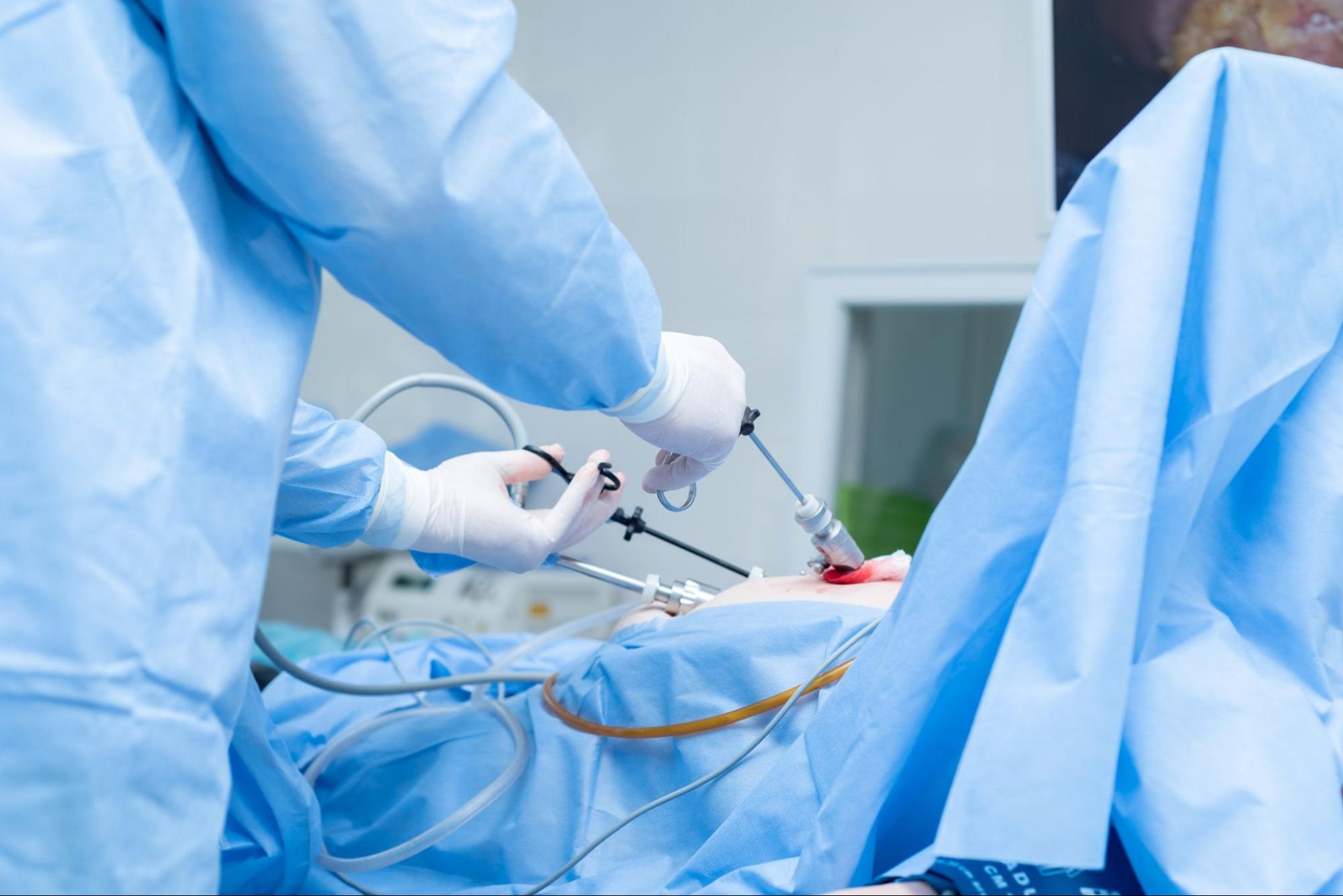
Laparoscopic gallbladder surgery, also known as keyhole gallbladder surgery, is a minimally invasive technique used to remove the gallbladder through several small incisions in the abdomen.
The procedure is performed under general anaesthesia. Rather than making a single large incision, the surgeon inserts a high-definition camera and specialised instruments through small openings in the abdominal wall. Images from the camera are displayed on a monitor, allowing the surgeon to perform the operation with a magnified view of the surgical area.
Laparoscopic cholecystectomy is widely used for conditions such as symptomatic gallstones, cholecystitis, gallbladder polyps and certain gallstone-related complications. For many patients, the minimally invasive nature of the procedure may result in smaller scars, less postoperative discomfort and a faster return to normal activities compared with traditional open surgery.
However, while laparoscopic surgery is suitable for many patients, the most appropriate approach depends on the severity of the condition, individual anatomy and the surgeon's assessment of what can be performed most safely.
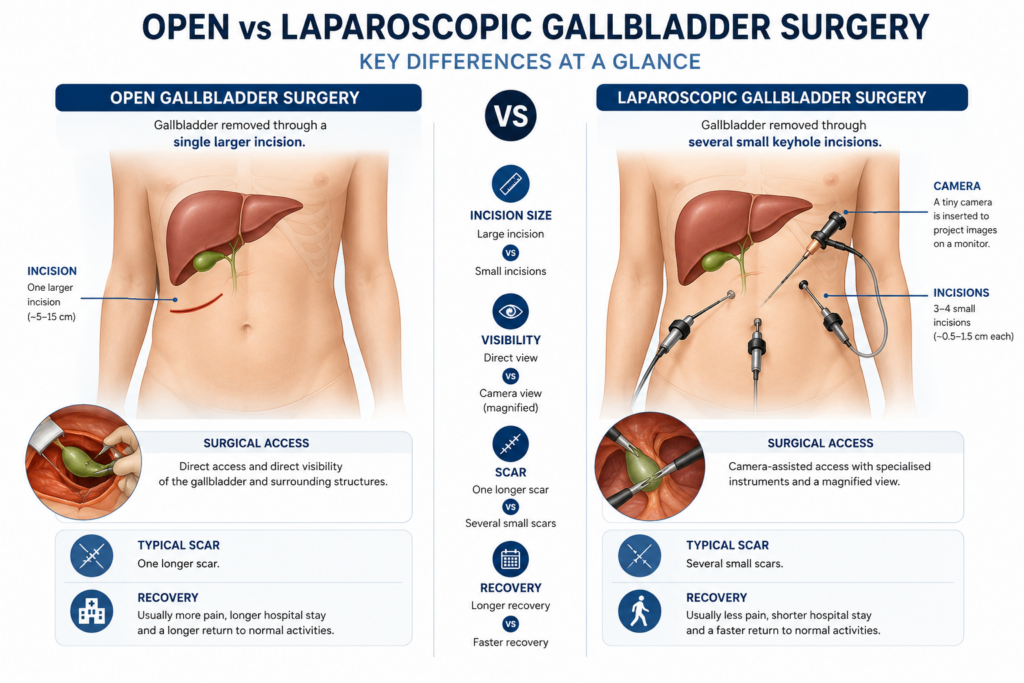
While both procedures are designed to remove the gallbladder and treat the same underlying conditions, there are several important differences in how they are performed and what patients can generally expect during recovery. These differences include the size of the incisions, the degree of tissue disruption, the length of hospital stay and the time required to return to normal activities.
The table below provides a general comparison between laparoscopic and open gallbladder surgery. However, it is important to remember that individual outcomes vary and the most appropriate surgical approach depends on the patient's condition, anatomy and overall health.
| FEATURE | LAPAROSCOPIC SURGERY | OPEN SURGERY |
| Surgical approach | Minimally invasive (keyhole surgery) | Traditional open operation |
| Incisions | Several small incisions | One larger incision |
| Visualisation | Camera assisted | Direct visualisation |
| Tissue disruption | Generally less | Generally more |
| Scarring | Smaller scars | Larger scar |
| Postoperative discomfort | Usually less | Often greater initially |
| Hospital stay | Typically shorter | Often longer |
| Recovery time | Usually faster | Usually longer |
| Return to daily activities | Earlier | More gradual |
| Suitable for | Many routine gallbladder conditions | Complex or selected cases |
When comparing open and laparoscopic gallbladder surgery, many patients naturally want to know which procedure is better. However, there is no single approach that is universally better for every patient or every gallbladder condition.
Instead, the most appropriate surgical approach depends on factors such as:
For many patients with uncomplicated gallstones or gallbladder disease, laparoscopic surgery is a suitable option because it is minimally invasive and is often associated with a faster recovery. However, laparoscopic surgery is also the first approach for complex cases involving acute gallbladder inflammation. Laparoscopic surgery has advanced to the point that more than 90% of gallbladder surgeries are performed as such. Open surgery however still has a small but significant role in gallbladder surgery .
The goal of gallbladder surgery is not simply to use the least invasive technique possible. Rather, it is to remove the gallbladder safely while minimising the risk of complications. For this reason, surgeons carefully evaluate each patient's condition before recommending the most suitable approach.
Laparoscopic gallbladder surgery is widely performed and is suitable for many patients with gallstones and other gallbladder conditions. However, not everyone is an ideal candidate for a keyhole approach.
In some situations, open gallbladder surgery may be safer or provide better access to the gallbladder and surrounding structures. The decision is not based on preference alone, but on what allows the operation to be performed as safely as possible.
Factors that may influence whether laparoscopic surgery is suitable include:
In some cases, a procedure that begins laparoscopically may need to be converted to an open operation. This decision is made when an open approach would provide safer access, better visualisation or greater control during surgery. Conversion should not be viewed as a complication, but rather as a measure taken to prioritise patient safety.
Recovery after gallbladder surgery varies depending on the surgical approach used, the severity of the underlying condition and an individual's overall health.
In general, patients who undergo laparoscopic gallbladder surgery tend to experience a shorter hospital stay, less postoperative discomfort and a faster return to daily activities compared to those who require open surgery. This is largely due to the smaller incisions and reduced disruption to surrounding tissues.
However, recovery timelines differ from person to person. Factors such as infection, inflammation, emergency surgery and pre-existing medical conditions can all influence the healing process. Your surgeon will provide personalised advice regarding recovery, activity restrictions and follow-up care based on your individual circumstances.
While laparoscopic gallbladder surgery is commonly performed and offers several advantages for many patients, it is not necessarily the best option in every situation. Likewise, open gallbladder surgery remains an important and effective treatment approach when it provides safer access or better surgical control.
The most appropriate treatment depends on several factors, including the underlying gallbladder condition, the severity of inflammation or infection, imaging findings, previous surgical history and your overall health. For this reason, treatment decisions are made on an individual basis rather than using a one-size-fits-all approach.
A thorough consultation and diagnostic assessment allow your surgeon to evaluate your condition, discuss the available treatment options and recommend the surgical approach that is most appropriate for your specific needs.
If you have been diagnosed with gallstones, cholecystitis, gallbladder polyps or another gallbladder condition, Dr Aaron Poh provides assessment and surgical management tailored to your individual circumstances. Arrange a consultation to discuss your diagnosis, understand your treatment options and determine the most suitable approach for your condition.
Not necessarily. Laparoscopic gallbladder surgery offers several advantages for many patients, including smaller incisions, less postoperative discomfort, shorter hospital stays and faster recovery. For many gallbladder conditions, it is often the preferred and the first approach.
However, "better" does not always mean "safer" for every situation. Severe inflammation, extensive scar tissue, complicated anatomy, perforated gallbladders or certain emergency situations may make an open approach more appropriate.
The best operation is not simply the least invasive one. It is the approach that allows the gallbladder to be removed safely while minimising the risk of complications. This is why surgeons evaluate each patient individually before recommending a treatment plan.
Open surgery may be recommended when there is severe inflammation, significant scar tissue, complicated anatomy, infection or other factors that make a minimally invasive approach less suitable.
Recovery is generally faster following laparoscopic surgery because the incisions are smaller and there is usually less disruption to surrounding tissues.
Most patients experience less postoperative discomfort after laparoscopic surgery, although pain management strategies are available for both procedures.
Yes, both laparoscopic and open surgery can effectively treat gallstones, cholecystitis and many other gallbladder conditions.
Yes, most people continue to live normal lives after gallbladder removal. The liver continues producing bile, which flows directly into the digestive system.
If you have recurring abdominal pain, gallstones, gallbladder inflammation or have been advised that surgery may be needed, an assessment with a specialist can help determine the most appropriate treatment plan.


Patients are advised to have a consultation with our Surgical Specialist, Dr Aaron Poh to first understand your condition and concerns. After referring you to the appropriate screening tests, he will advise you of your diagnosis and treatment options after the tests and scopes


Copyright © Gallstones Doctor Singapore by Alpine Surgical Practice | Terms & Conditions

Copyright © Gallstones Doctor Singapore by Alpine Surgical Practice | Terms & Conditions